by Joseph Brophy for the Maricopa Lawyer, a publication of the Maricopa County Bar Association
This month’s column discusses the adoption of Resolution 100, which amends ABA Model Rule 1.6 to make explicit a lawyer’s duty to “inquire into and assess the facts and circumstances of a representation.”
We’re the Millers: Miller Act Surety Bonds, From Alpha to Zulu
Joseph A. Brophy, a partner with Jennings Haug Keleher McLeod’s construction law and surety law practices, will be providing an overview of Federal Miller Act and Arizona “Little Miller” Act payment and performance bond requirements.
by Joseph Brophy for the Maricopa Lawyer, a publication of the Maricopa County Bar Association
Multiple companies are developing AI programs to perform legal research and even draft legal documents. However, the reliability of using AI has caused issues around the accuracy of its product. Several recent cases, discussed in this article, included the citing of cases that didn’t exist. Jurisdictions around the country are taking action to require lawyers who are interested in using AI to lighten their workload to verify the product being produced by an AI tool.
by Joseph Brophy for the Maricopa Lawyer, a publication of the Maricopa County Bar Association
This month’s column discusses an unusual dispute among judges from the Federal Circuit. At issue was whether 95-year-old Judge Pauline Newman could be barred from hearing or deciding cases, and whether Judge Newman must submit to medical testing to determine whether she has physical or mental disabilities that prevent her from discharging her duties.
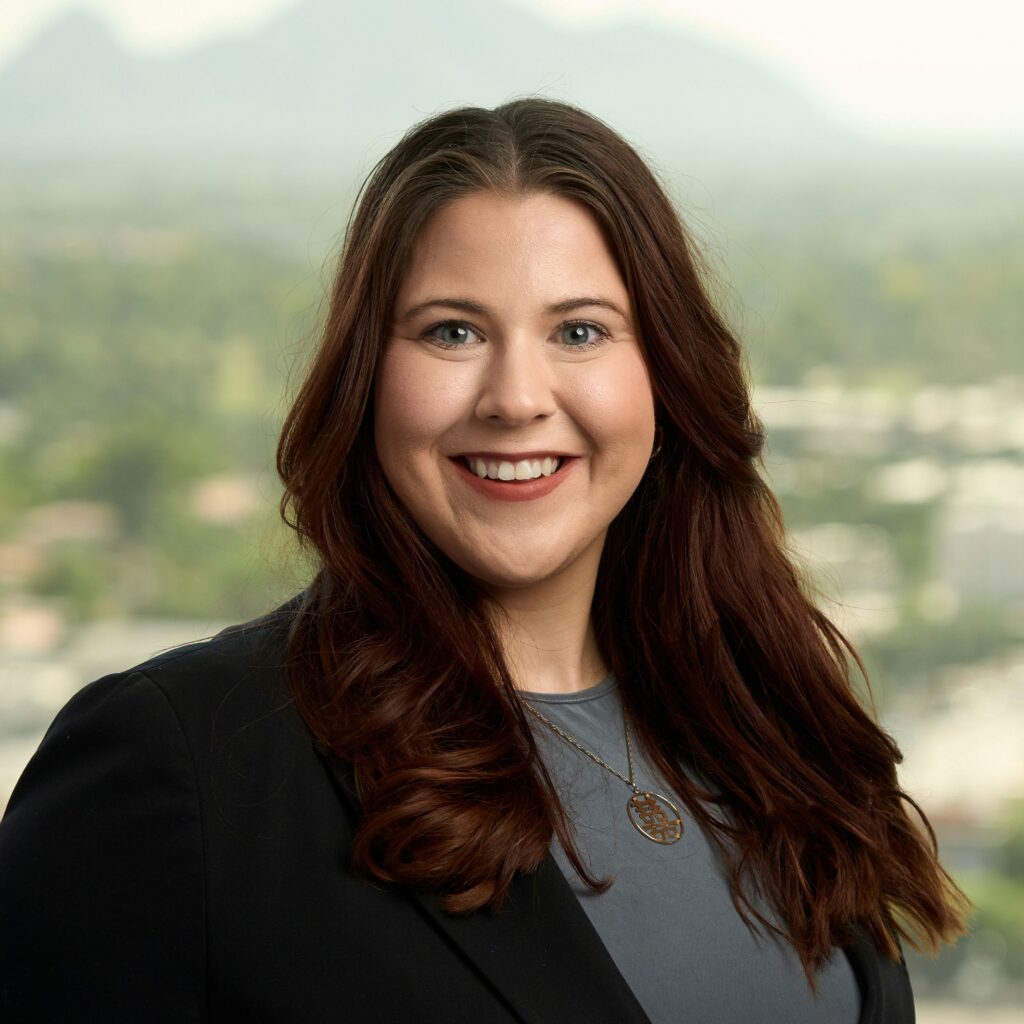
Jennings Haug Keleher McLeod (JHKM) announces that Erin Przybylinski has joined the firm as a litigation attorney with its Phoenix office. Erin’s practice focuses primarily on representing clients in a wide range of litigation matters, including civil litigation, medical malpractice, personal injury and wrongful death as well as civil rights and constitutional law violation claims.
by Joseph Brophy for the Maricopa Lawyer, a publication of the Maricopa County Bar Association
This month’s column discusses the California trend, which has arrived in Arizona, that raises questions about the propriety of using the Rules of Professional Conduct to punish lawyer speech unconnected to judicial proceedings and whether licensure is being used as “politics by other means” to silence politically dissident lawyers. Read about various cases that raise questions about how ER 8.4(c) has jumped the tracks from prohibiting deceptive conduct and is morphing into a license for the judiciary to regulate the content of speech by conditioning a lawyer’s right to practice law on the expression of only those political statements that are approved by the judiciary, and provides a reminder of what the Rules of Professional Conduct are intended for.